
Restoring my Singer Treadle Sewing Machine
Recently, my mom gave me a Singer treadle sewing machine that she used when she was sewing her clothes for college back in the late 1960s. I don’t think it’s been used much since then, and it’s been sitting in her house for years. She brought it out to me a couple of weeks ago, and when I first opened the case, I was so excited to put a belt on and start sewing. I thought it would be a quick fix and I would be so sewing something cool by end of the week.
Turns out, I didn’t know what I didn’t know.
This post includes affiliate links.
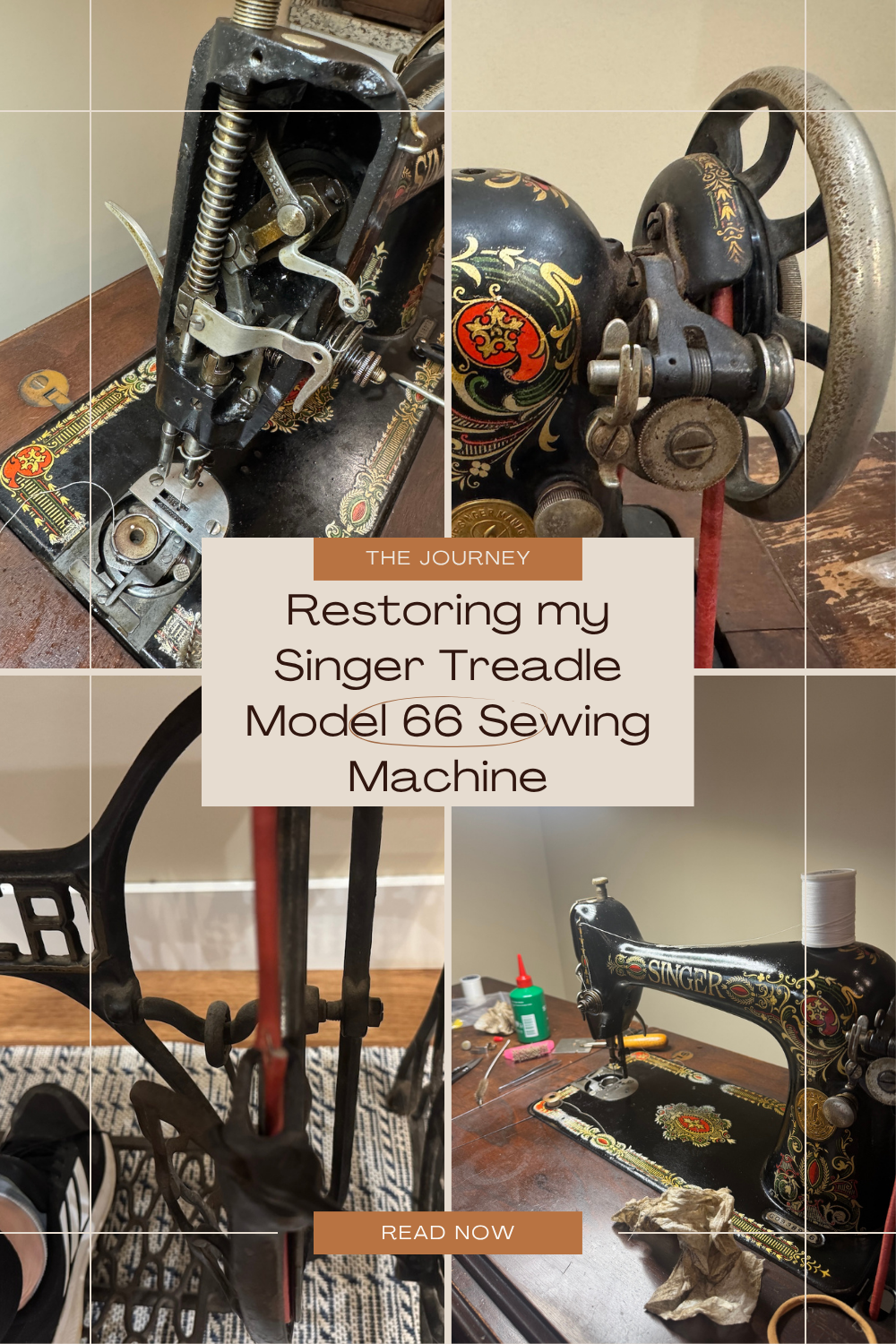
Restoring my Singer Treadle Sewing Machine
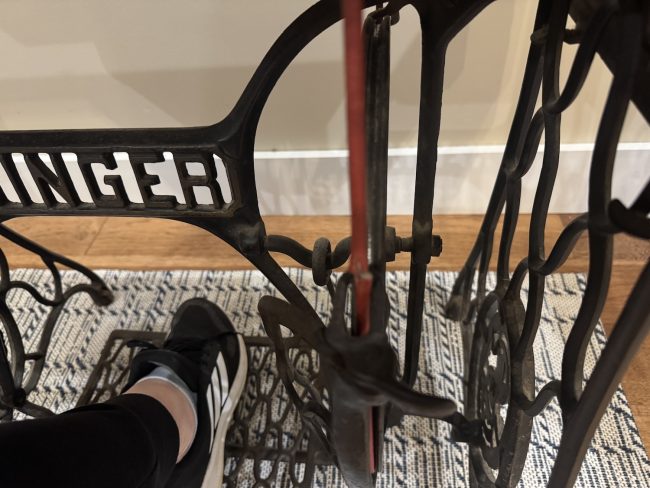
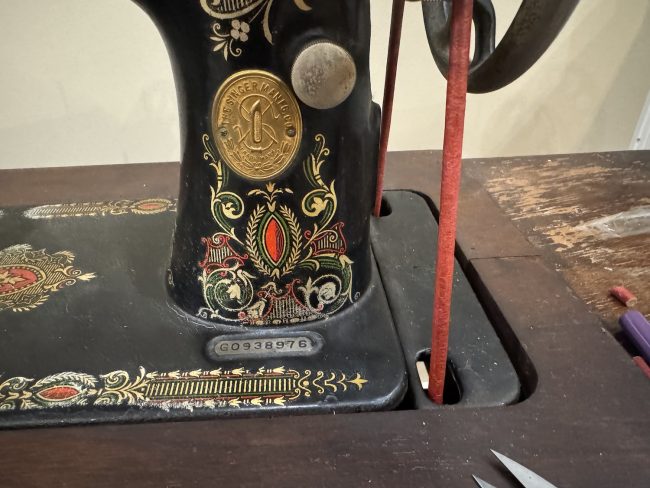
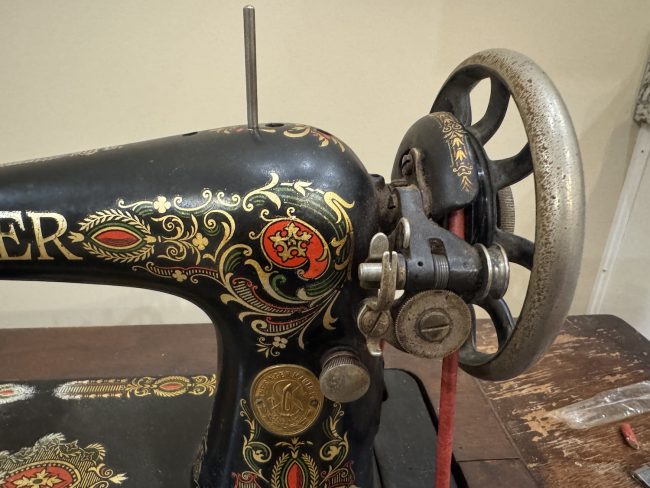
There was an original leather belt in the drawers, but it was too dry rotted to work so I ordered a treadle belt for about $10 and jumped right in. Getting the tension just right took a little trial and error, but I figured once that was done, I’d be set. Then I realized the treadle wasn’t working the way it should. Instead of moving smoothly in one direction, the wheel kept rocking back and forth, and sometimes it would lock up so tight I couldn’t even push the pedal down.
That sent me down the next rabbit hole.
A family friend came over and showed me how the treadle is supposed to move—steady, continuous motion driving the mechanism underneath the table—but mine was still stiff and inconsistent. That’s when I realized that it probably needed oil.
I ordered Singer sewing machine oil and started applying it anywhere I could reasonably reach, but it still felt locked up. Eventually, I realized I needed more help than YouTube and trial-and-error, so I started calling around and found a lady who repairs sewing machines several hours away. Sarah hopped on a FaceTime call with me and quickly spotted one issue—I had the clutch wheel assembled incorrectly. She walked me through fixing it, and for the first time, I could feel things starting to work the way they should.
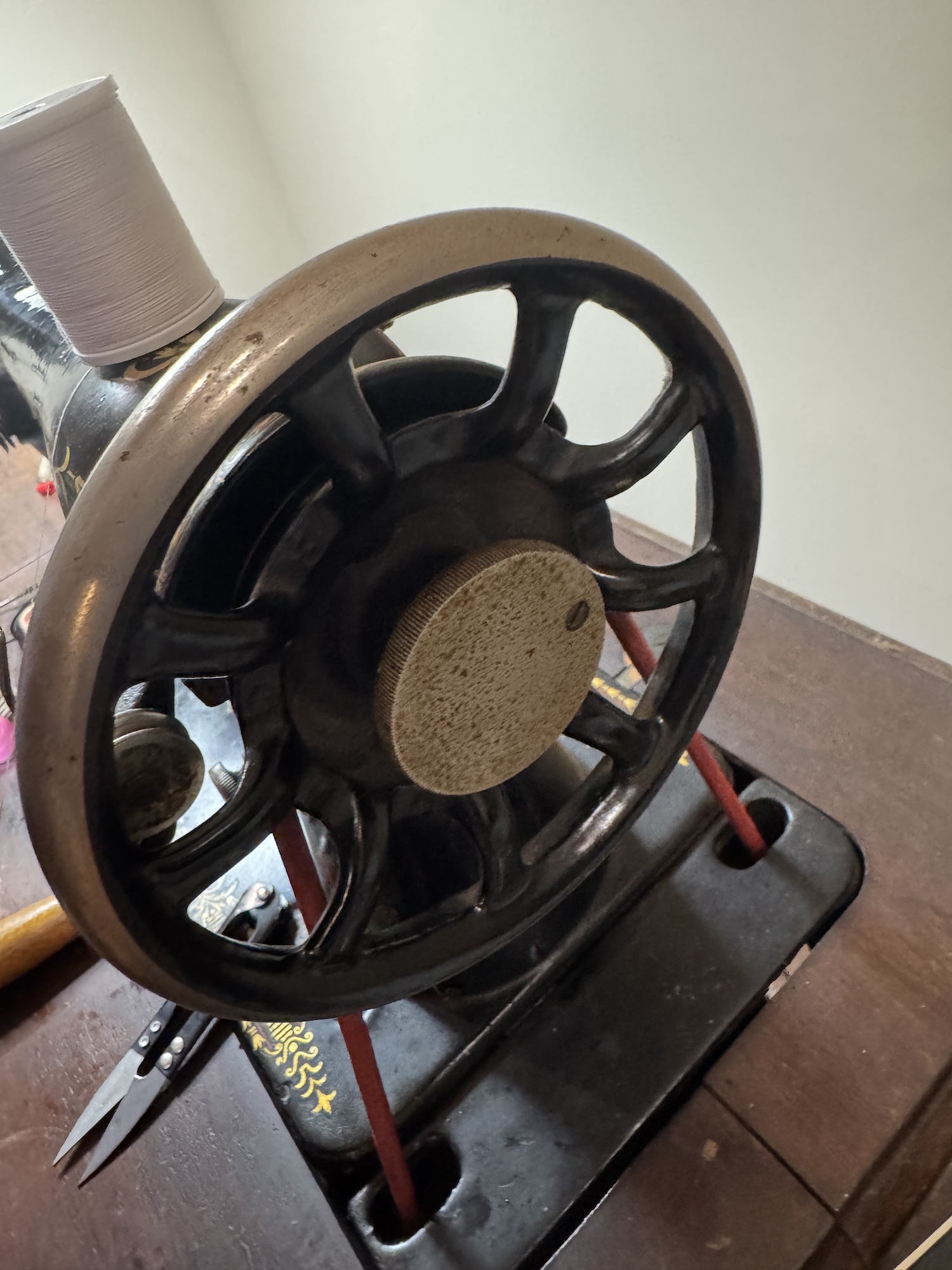
I was making progress.
But the treadle still wasn’t smooth, so I added more oil. Suddenly, the treadle and wheel started moving better—but the needle wouldn’t budge. The mechanism on the left side was still completely stuck.
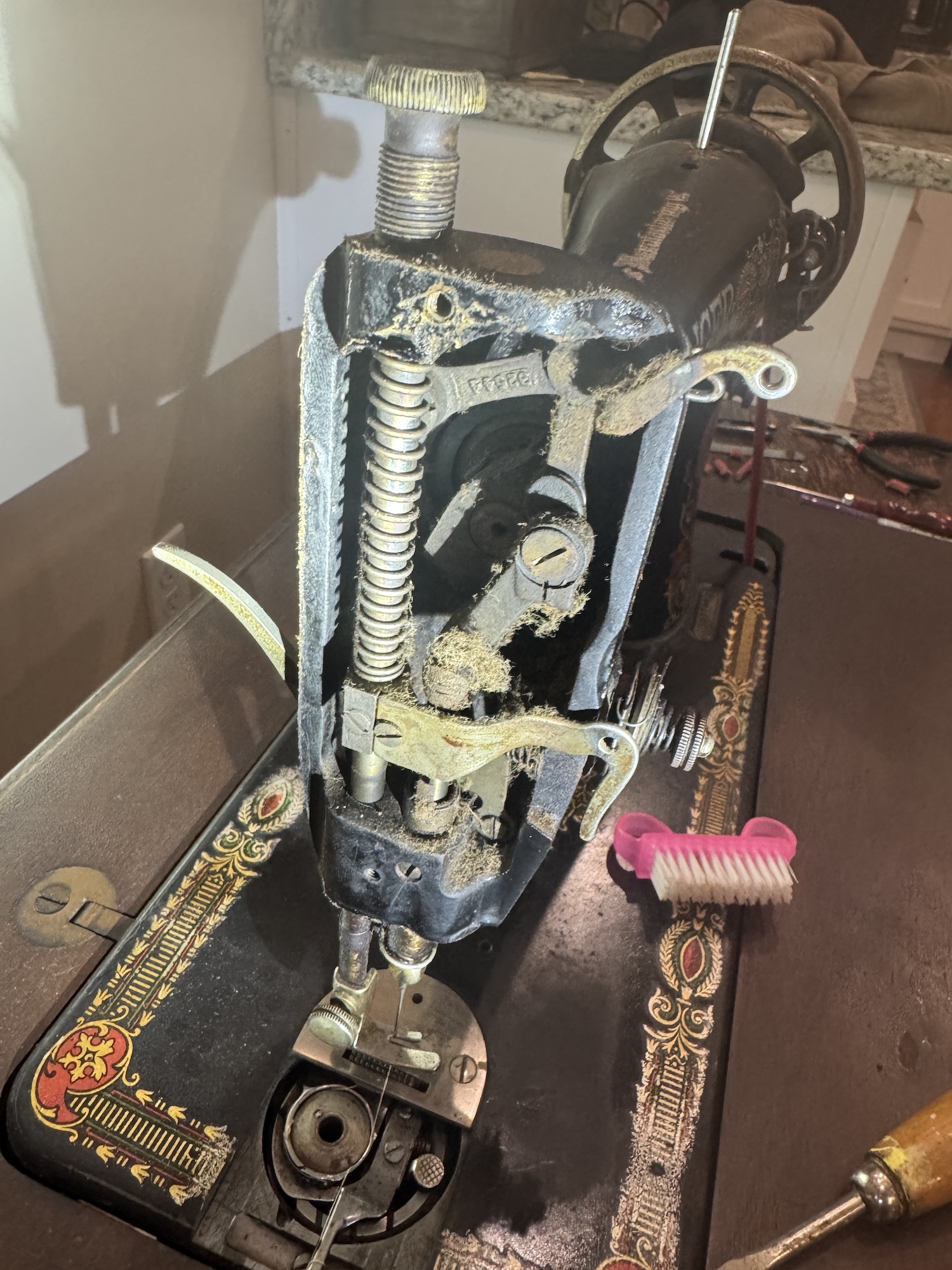
So I opened up the casing.
What I found made sense: the oil from decades ago had turned into something more like varnish. It wasn’t lubricating anything anymore—it was holding everything in place. Sarah gave me a piece of advice: “If you couldn’t use it in the early 1900s, don’t use it now.” So I skipped the harsh cleaners and stuck with simple tools—a brush, a little air, paper towels, and sewing machine oil.
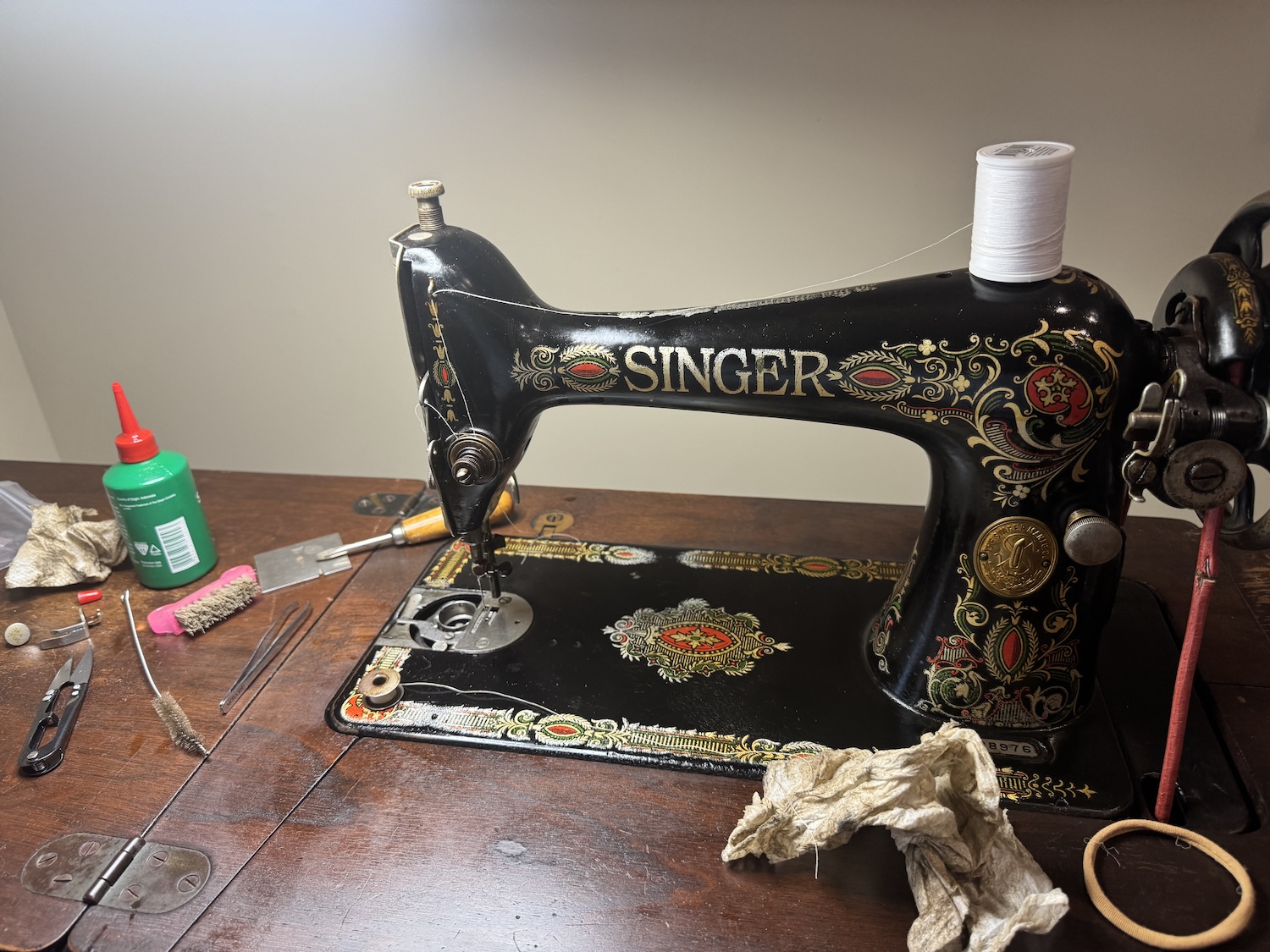
Slowly, carefully, I started cleaning.
Eventually, I got the wheel to engage the needle, but it took about 100 manual turns before anything really moved. At that point, I was pretty sure I might be dealing with a lost cause. I walked away and went to bed.
The next morning, around 5:00, while I was fixing breakfast, I walked over and gave the treadle another try.
And just like that—it worked. No more frozen treadle!
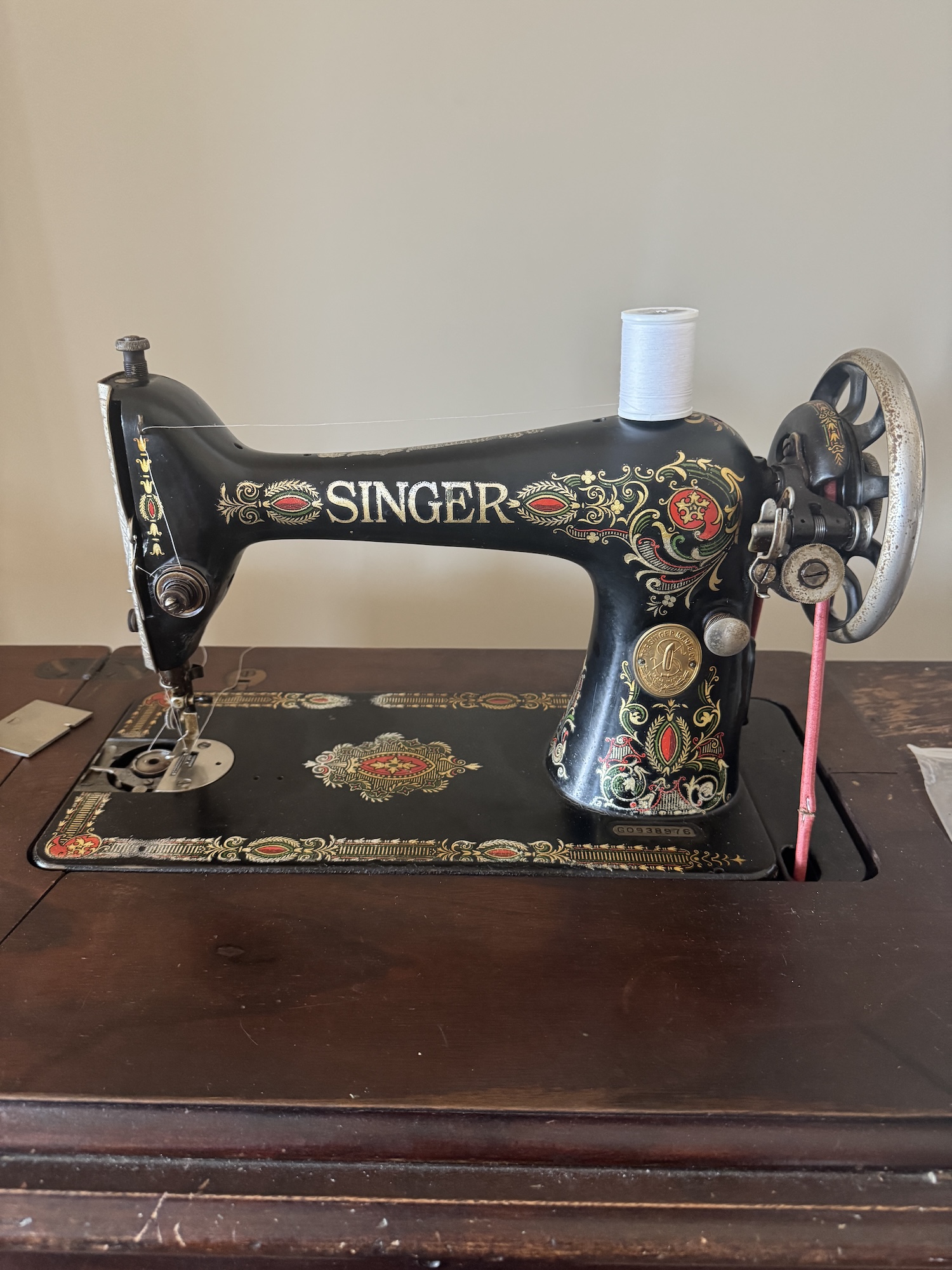
The treadle moved smoothly. The wheel turned just like it should. And the needle went up and down like it hadn’t in decades. There’s a reason people say something “runs like a sewing machine”—it was smooth, steady, and almost rhythmic. Believe me when I tell you I was way more excited than anyone should be at 5 AM!
Now I knew I was on the right track. I was finally ready to sew, right?
But of course…there was one more problem.
I downloaded the manual from Ismacs, carefully threaded the needle, double-checked the needle direction, and even cleaned out the bobbin area—pulling out what felt like 50 years’ worth of red fuzz from an old project.
The machine runs beautifully now. The treadle works. The needle moves exactly like it should.
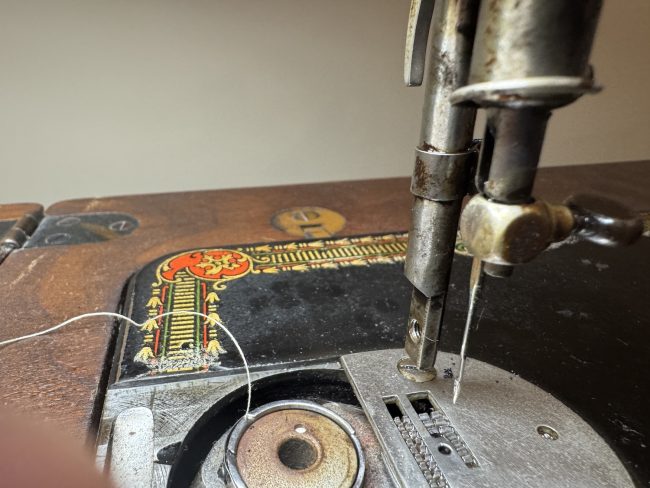
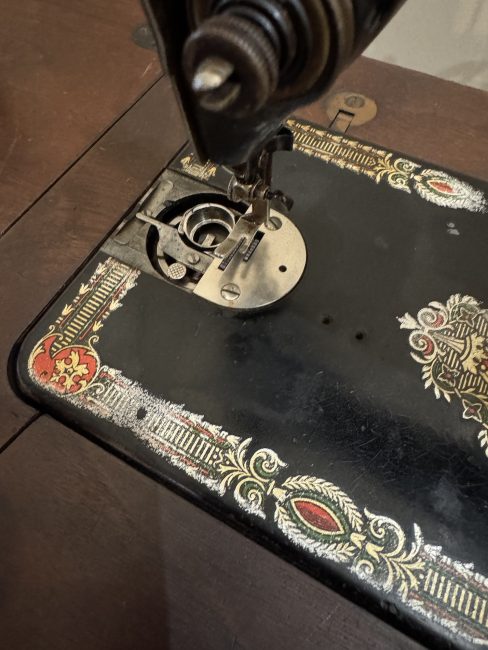
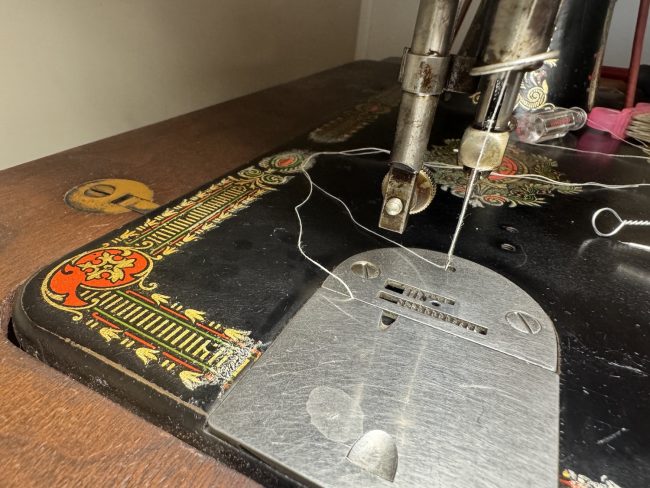
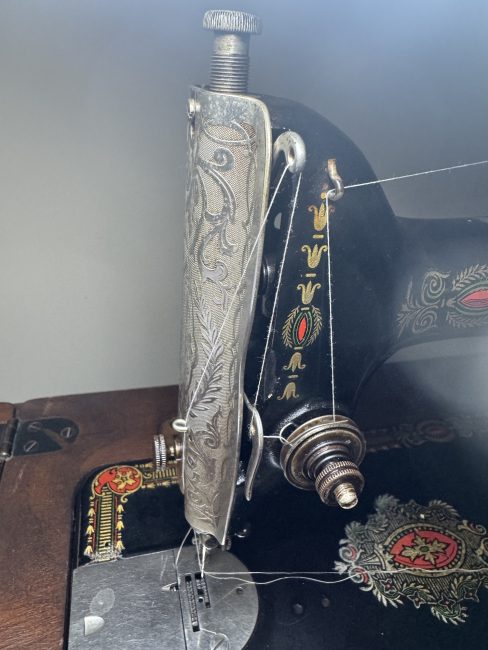
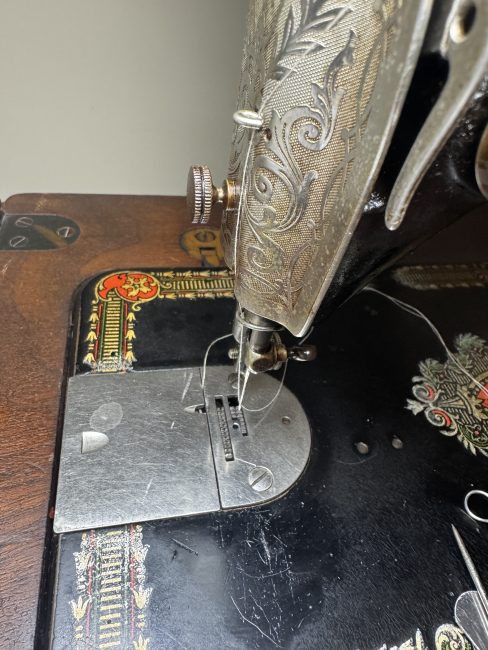
But the needle won’t pick up the bobbin thread. I’ve been stuck on this step for about 3 days.
So the restoration part is done… but I’m stuck on the very last step.
Surely one of you has used a treadle Singer and can help me figure this out. What am I missing? How do I get the needle to catch the bobbin thread so I can finally start sewing on this beautiful machine?
Stay tuned for Part 2… and if you know how to help me, please leave a comment or send me a message!




I have a very similar machine. Could be one of 2 reasons . On mine the needle goes in with the eye going side to side, not front to back. Feel the needle and there will be a bump near the eye – it has to be on the right and you thread it left to right. Make sure the thread coming off the bobbin is in the proper direction. It looks correct in the pictures.
If there is anything bobbin casing was in the front of the needle then the needle would go in with the eye facing front to back.
As the race moves the bobbin thread around, it slides down the hump on the back of the needle and catches the upper thread. Tug on the upper thread after one cycle of the needle and it will bring the bobbin thread up.
Any other questions – email me janladouceur@gmail.com
Hi Jan, Thanks so much for the tips and suggestions. I really appreciate the offer to reach out with other questions. I’m hoping to get time this weekend to tackle this and will definitely reach out if I stay stuck :-). Thanks!